
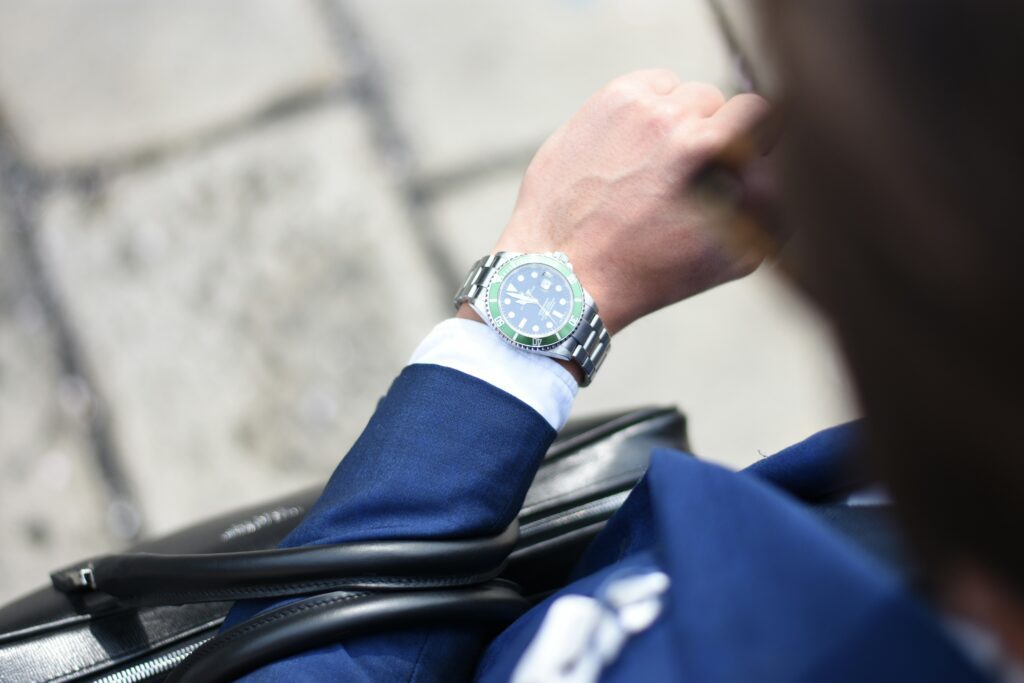
Luxury goods logistics covers the specific, time-critical moments in the watch and jewelry trade that standard shipping and generic high value courier services were never built to handle: a fair launch that cannot slip, a piece sent to a workshop or service center on a fixed turnaround, or an estate or grey market sale that needs authentication and export paperwork alongside secure delivery. An onboard courier fits these moments because it combines speed with personal custody and, when needed, correct CITES documentation for exotic or protected materials.
Why watches and jewelry need their own logistics playbook
Every high value item benefits from secure, discreet handling, but the watch and jewelry trade has a set of recurring moments that are specific to it. A boutique launch has a hard date. A piece sent for repair or resizing has a workshop turnaround window. An estate or grey market sale depends on authentication and paperwork as much as on the physical item arriving safely.
For freight forwarders serving watch and jewelry brands, boutiques, dealers, auction houses and service workshops, these moments come with deadlines set somewhere else, a launch calendar, a service level agreement, or a buyer's patience, and the logistics has to fit around them rather than the other way around. This gap is exactly what luxury goods logistics is built to close.
Trade fair and launch logistics, a core luxury goods logistics moment
Major watch and jewelry fairs, from Watches and Wonders in Geneva to the international jewelry shows in Vicenza and Hong Kong, concentrate a year of product launches into a single week, and boutiques worldwide expect stock on the shelf the moment an embargo lifts. Missing that window is not just a delay, it is a missed sales moment that cannot be recreated later.
- Pre-launch samples moving to press, retailers and brand ambassadors ahead of an embargo date.
- Day one boutique replenishment, where a limited allocation has to reach specific stores by a fixed date.
- Fair to fair transfers, where display pieces move between events on tight turnarounds.
Service center, workshop and repair logistics in luxury goods logistics
A watch or a piece of fine jewelry is often more valuable, and more fragile, in transit to and from a repair workshop than the finished piece ever was on display. Movements, loose stones, and pieces awaiting resizing or restoration all follow their own logistics pattern.
- Brand authorized service centers and specialist workshops are often centralized in one or two countries, so a repair can mean two long international legs instead of a local trip.
- Service level agreements set a fixed turnaround time that the logistics leg eats into, not just the repair or restoration itself.
- Loose components, such as a watch movement or an unset stone, require different handling from a finished, cased piece, with more sensitivity to shock and less tolerance for delay.
Grey market, estate and pre-owned logistics, where authentication matters as much as speed
The grey and pre-owned watch market, along with estate jewelry and auction sales, has grown into a significant share of the luxury trade, and it runs on a different logistics need than authorized retail.
- Authentication, where the buyer, seller or an intermediary needs the piece physically present to verify it before a sale completes.
- Provenance documentation, since a clear paper trail affects both trust and resale value, particularly for estate jewelry and vintage pieces.
- Cross border private sales, where the item needs to move quickly and discreetly between an individual seller and buyer, often without a corporate account behind either party.
CITES and protected materials in luxury goods logistics
Many watches ship with straps made from crocodile or alligator leather, and some jewelry uses coral, tortoiseshell or other materials sourced from protected species. All of these fall under CITES, the international treaty regulating trade in endangered species products. Shipping a piece with a protected material across borders without the correct CITES documentation can result in the item being held or seized at customs, regardless of how well the rest of the shipment was handled.
This is a detail that generic high value couriers and standard parcel carriers frequently miss, since it has nothing to do with the item's declared value and everything to do with a single component most people would not think twice about. Catching it is a basic requirement of real luxury goods logistics.
Smartwatches and certain electronic jewelry pieces add a second, unrelated documentation need: the lithium batteries inside them fall under IATA dangerous goods rules, which a courier unfamiliar with the trade may not think to check.
Onboard courier vs. standard luxury shipping
Both options offer secure handling, but they solve different problems.
| Criteria | Onboard courier | Standard luxury shipping (FedEx, UPS, DHL) |
|---|---|---|
| Custody | Personal, unbroken, one courier the entire journey | Tracked network handling, multiple checkpoints |
| Best for | Fair launch deadlines, service center windows, private estate or grey market sales | Routine boutique restocking with buffer time |
| Documentation handling | Courier can carry and present CITES and authentication paperwork alongside the item | Paperwork processed separately through standard customs channels |
| Typical cost | Higher, priced per mission | Lower, priced by weight and service level |
For routine stock replenishment, standard luxury shipping from a major carrier is often the practical choice. For a fair launch, a workshop deadline, or a private sale where authentication and paperwork travel with the item, a dedicated onboard courier is the safer route. Choosing correctly between the two is the practical core of luxury goods logistics.
How OBC ONE handles a luxury goods mission
A typical luxury goods logistics mission with OBC ONE runs through six steps, most of which overlap to save time.
- Brief and quote. You share the item, its declared value, any exotic or protected materials, origin, destination and the deadline. OBC ONE returns an all-in quote in under 15 minutes.
- Courier assignment. A vetted courier near the origin is briefed on the specific item and any discretion or documentation requirements.
- Documentation check. CITES paperwork for protected materials and any authentication or provenance documents are verified before departure.
- Personal custody in transit. The courier carries the item in the cabin, staying with it through every connection.
- Verified delivery. Recipient identification is confirmed before the item is released.
- Proof of delivery. Timestamped confirmation and, where required, a signed receipt.
Why freight forwarders route luxury goods missions through OBC ONE
Choosing the right luxury goods logistics partner starts with the business model. Most watch and jewelry focused couriers sell directly to brands, boutiques, dealers and auction houses, which puts them in competition with the forwarders who might otherwise use them. OBC ONE is built the opposite way: we work exclusively for and with freight forwarders and time-critical desks. We never approach your clients directly and never compete with you.
That partner model is backed by real operator experience. OBC ONE was founded by an onboard courier who personally flew roughly three million kilometers over six years, so the network understands what a genuinely deadline critical mission requires. Forwarders use us because we deliver:
- An all-in quote in under 15 minutes, 24/7/365.
- 1,500+ vetted couriers positioned around major hubs worldwide.
- True door to door coverage, with direct hand delivery to a verified named recipient.
- Discreet, neutral handling and correct CITES documentation for exotic and protected materials.
- One specialty, onboard courier and hand carry for time-critical missions, done at the highest standard.
How to choose a luxury goods logistics partner
- Real familiarity with CITES documentation for exotic and protected materials, not just general customs knowledge.
- Discreet handling practices suited to high value, low volume shipments.
- Fast, transparent quoting, ideally with a named dispatcher accountable for the mission.
- Flexibility for private, individual shipments, not just corporate boutique accounts.
- A forwarder-only model, if you are a forwarder, so your partner never becomes a competitor in your own luxury goods logistics business.
Frequently asked questions
What is luxury goods logistics?
Luxury goods logistics covers the specific, time-critical moments in the watch and jewelry trade, such as fair launches, service center movements and estate or grey market sales, that standard shipping and generic high value courier services were not built to handle. It combines speed, personal custody, and correct documentation for materials like exotic leather or protected gemstone sources.
Why do trade fair launches need special logistics?
Major watch and jewelry fairs concentrate a year of product launches into a single week, and boutiques expect stock on the shelf the moment an embargo lifts. Missing that window is a missed sales moment that cannot be recreated later, which is why pre launch samples and day one replenishment often move by onboard courier.
Why does a piece sent for repair need different handling?
A watch movement or an unset stone is often more fragile in transit than the finished piece, and authorized service centers or specialist workshops are frequently centralized in one or two countries, adding international legs to a repair. Service level agreements set a fixed turnaround that the logistics leg has to fit inside.
What is CITES and why does it matter for watches and jewelry?
CITES is the international treaty regulating trade in products from endangered species, including the crocodile and alligator leather used in watch straps and materials such as coral or tortoiseshell used in some jewelry. Shipping a piece with a protected material across borders without correct CITES documentation can result in it being held or seized at customs.
Why does the grey and estate market need its own logistics approach?
Grey market watch sales and estate jewelry sales often depend on physical authentication and provenance documentation alongside secure delivery, and many transactions happen between private individuals without a corporate shipping account. This calls for a courier who can handle documentation and discretion together, not just fast transit.
Do you sell directly to brands, boutiques or auction houses?
No. OBC ONE works exclusively with and for freight forwarders and time-critical desks. We act as a white label partner and never approach our clients' customers directly.
Get luxury goods logistics help in 15 minutes
If you are a freight forwarder with a watch or jewelry fair, service center or estate sale shipment on the desk, OBC ONE is your specialist hand carry partner, 24/7, worldwide and never a competitor. Contact our team for an all-in quote in under 15 minutes, or explore more time-critical logistics insights.