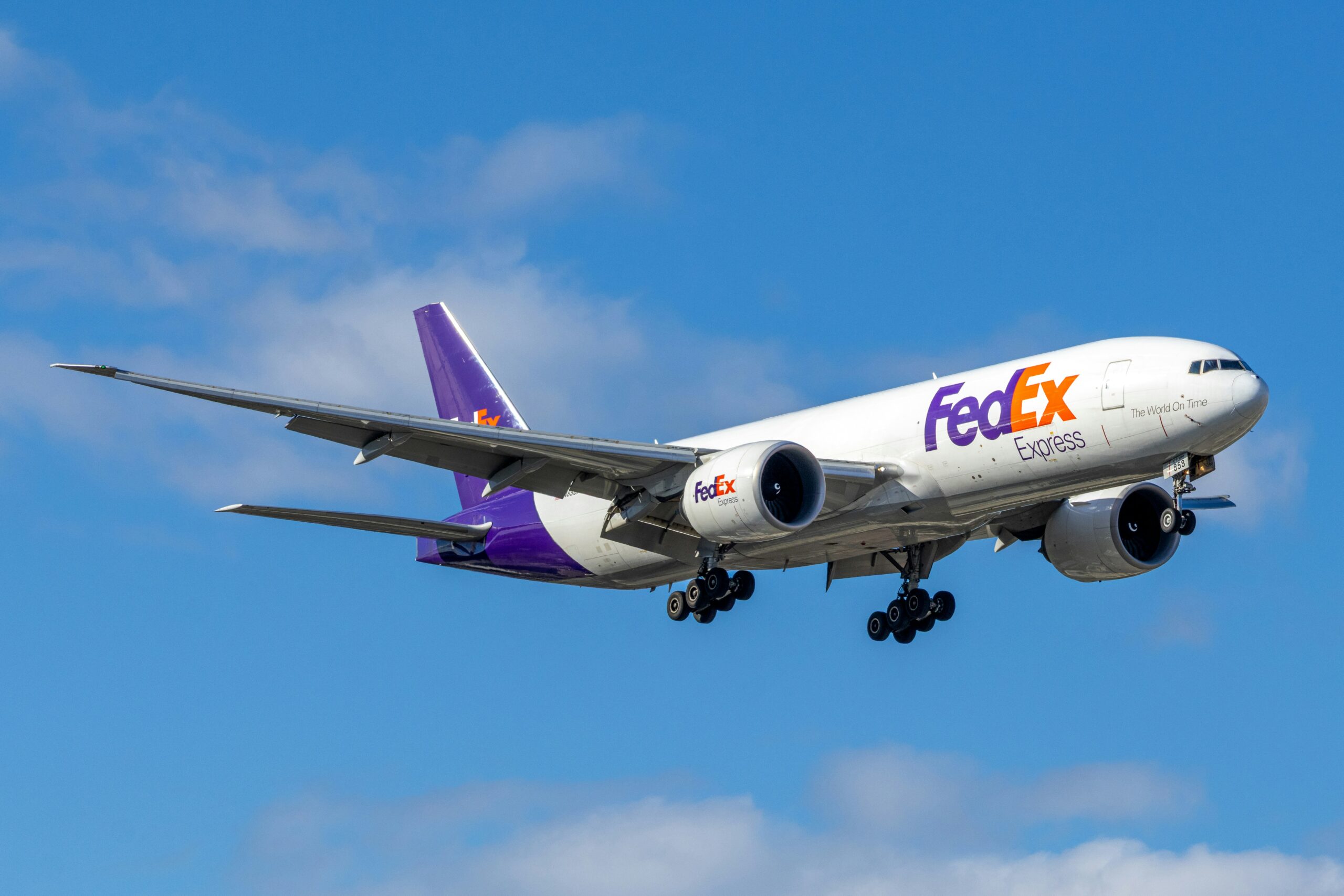
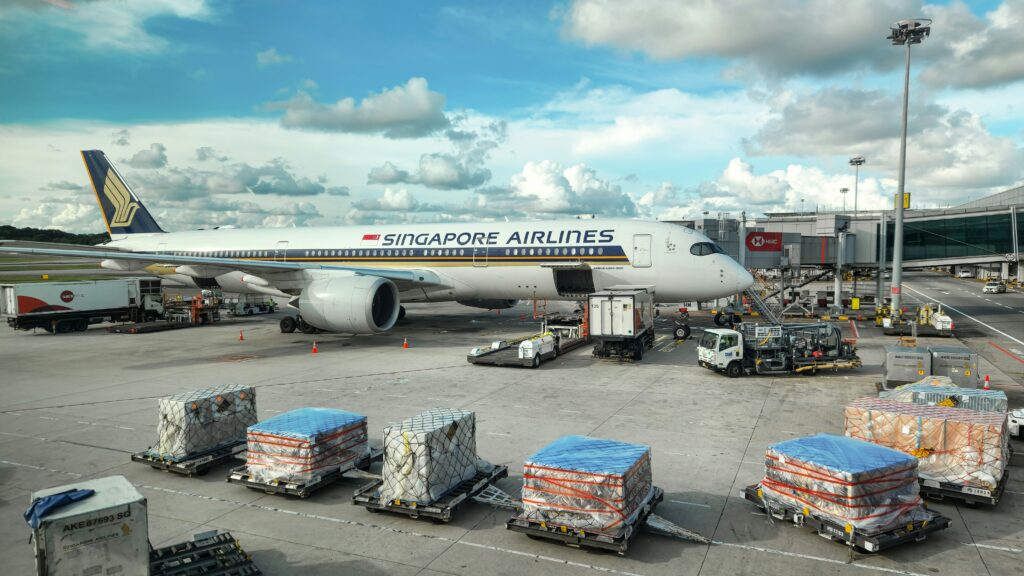
Air freight is standard scheduled cargo movement, priced on chargeable weight rather than the number on a scale. Under the IATA standard, chargeable weight is the higher of actual weight or volumetric weight, calculated from a shipment’s dimensions, which means a large, lightweight box can be billed as though it weighs far more than it does. A large share of that capacity also travels in the belly holds of passenger aircraft rather than dedicated freighters, so when passenger schedules shrink on a given route, air freight space and rates move with them.
Why the scale rarely tells the full story
Air freight is charged on whichever figure is higher between two calculations.
- Actual weight, the physical weight of the shipment measured in kilograms.
- Volumetric weight, calculated by multiplying length, width, and height in centimeters and dividing by 6,000, the IATA industry standard divisor.
- The higher of the two becomes the chargeable weight, the actual figure the freight rate is applied against.
The 6,000 divisor reflects a density threshold of roughly 167 kilograms per cubic meter. Cargo denser than that, machinery, metal parts, dense liquids, is billed on actual weight. Cargo lighter than that, apparel, foam, bulky but light packaging, is billed on volumetric weight instead, because it takes up more of the aircraft’s limited space than its scale weight suggests.
A concrete example of how this plays out
A box measuring 80 by 60 by 50 centimeters has a volume of 240,000 cubic centimeters. Divided by the 6,000 divisor, that comes to a volumetric weight of 40 kilograms. If the actual weight on the scale is 25 kilograms, the freight rate still applies to 40 kilograms, not 25, simply because of how much space the box occupies relative to what it weighs.
Why passenger flight schedules quietly set air freight capacity
Cargo moves on two kinds of aircraft: dedicated freighters, and the belly holds of ordinary passenger aircraft, tracked across the industry through data compiled by bodies such as the International Civil Aviation Organization.
- Belly capacity on passenger aircraft is generally cheaper than freighter space, but it is limited and shares the hold with passenger luggage on the same flight.
- When passenger flights are reduced on a given route, whether for seasonal, economic, or route-planning reasons, the available belly cargo capacity shrinks along with it.
- Rates typically climb as that capacity tightens, since the same volume of cargo demand is now competing for fewer available holds.
Where an onboard courier sits alongside this capacity question
An onboard courier also relies on scheduled passenger flights, but travels in the cabin as accompanied baggage rather than competing for belly cargo hold space. The shipment is not priced by chargeable weight the way standard air freight is, and it is not exposed to the same belly capacity squeeze that tightens whenever passenger schedules are cut on a given route.
Air freight vs. onboard courier
| Criteria | Air freight | Onboard courier |
|---|---|---|
| Pricing basis | Chargeable weight, actual or volumetric | Priced per mission |
| Capacity source | Belly holds and dedicated freighters | Cabin space on a scheduled passenger flight |
| Best for | Routine, non-urgent, larger volume cargo | Small, high value, or deadline critical shipments |
How OBC ONE handles a shipment that outgrows standard air freight
A typical mission runs through six steps with OBC ONE, most of which overlap to save time.
- Brief and quote. You share the shipment, its dimensions, origin, destination, and the deadline. OBC ONE returns an all-in quote in under 15 minutes.
- No chargeable weight surprise. The quote is set for the mission, not recalculated against a volumetric formula after booking.
- Courier assignment. A vetted courier near the origin is dispatched immediately.
- Personal custody in transit. The courier carries the shipment in the cabin, staying with it through every connection.
- Direct delivery. Handover happens with the named recipient, not a cargo terminal.
- Proof of delivery. Timestamped confirmation for your records.
Why freight forwarders route these decisions through OBC ONE
Choosing the right option when belly capacity is tight or a chargeable weight surprise is not acceptable starts with the business model. Many specialty couriers sell directly to shippers, which puts them in competition with the forwarders who might otherwise use them. OBC ONE is built the opposite way: we work exclusively for and with freight forwarders and time-critical desks. We never approach your clients directly and never compete with you.
That partner model is backed by real operator experience. OBC ONE was founded by an onboard courier who personally flew roughly three million kilometers over six years, so the network understands exactly when standard air freight makes sense and when capacity or pricing variables make a scheduled courier the better call. Forwarders use us because we deliver:
- An all-in quote in under 15 minutes, 24/7/365.
- 1,500+ vetted couriers positioned around major hubs worldwide.
- True door to door coverage, with import and export customs clearance and Importer of Record service in most markets.
- IATA certified dangerous goods capability for shipments that require it.
- One specialty, onboard courier and hand carry for time-critical missions, done at the highest standard.
How to choose between air freight and an onboard courier
- Honest guidance on chargeable weight before booking, not a surprise on the final invoice.
- Awareness of belly capacity on the specific route, rather than assuming space is always available.
- Fast, transparent quoting, ideally with a named dispatcher accountable for the mission.
- Real network density near major hubs, so the onboard courier option is not delayed by being flown in first.
- A forwarder-only model, if you are a forwarder, so your partner never becomes a competitor for your clients.
Frequently asked questions
What is chargeable weight in air freight?
Chargeable weight is the higher of a shipment’s actual weight or its volumetric weight, calculated from its dimensions using the IATA standard divisor of 6,000. The higher figure is what the freight rate is actually applied to.
Why can a light package cost as much as a heavier one?
If a shipment is bulky but light, its volumetric weight can exceed its actual weight, and the airline charges based on the higher figure, since the space it occupies matters as much as its physical weight.
Why does cutting passenger flights affect air freight rates?
A significant share of global air cargo travels in the belly holds of passenger aircraft. When passenger flights on a route are reduced, that belly capacity shrinks, and rates typically rise as the remaining space becomes more competitive.
Is an onboard courier priced by chargeable weight too?
No. An onboard courier is priced per mission rather than by a volumetric or actual weight formula, and travels in the cabin rather than competing for belly cargo hold space.
When does standard air freight make more sense than an onboard courier?
For routine, non-urgent shipments where cost efficiency matters more than a specific deadline, and where the volume exceeds what a courier could carry as accompanied baggage.
Do you sell directly to shippers or buyers?
No. OBC ONE works exclusively with and for freight forwarders and time-critical desks. We act as a white label partner and never approach our clients’ customers directly.
Get a quote without a chargeable weight surprise
If you are a freight forwarder who wants clarity before a shipment moves, not after the invoice arrives, OBC ONE gives you a straight answer, 24/7, worldwide and never a competitor. Contact our team for an all-in quote in under 15 minutes, or explore more time-critical logistics insights.