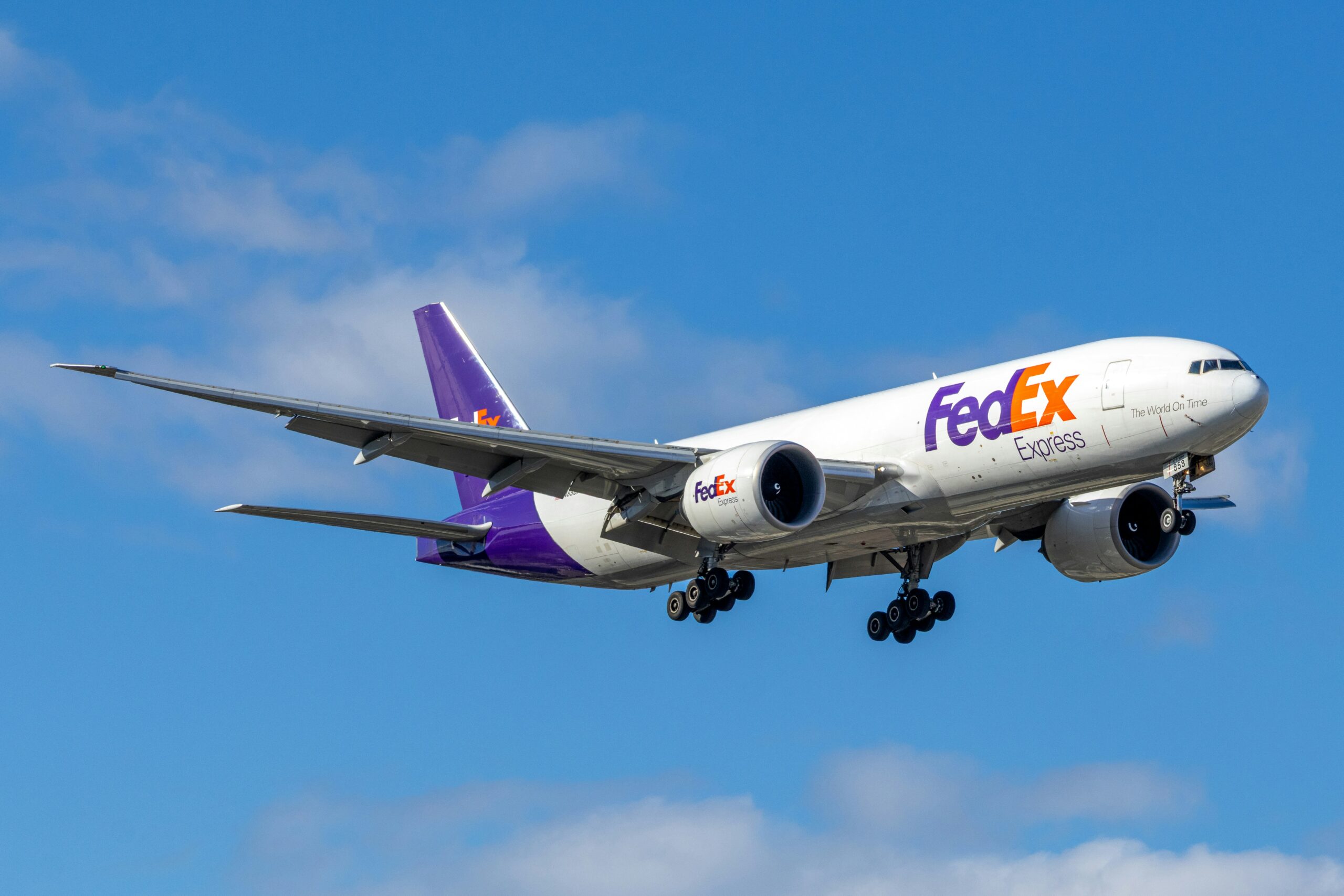

NFO vs Air Charter vs OBC comes down to three different answers to the same question: how does the shipment actually reach the flight. NFO, already covered on this site, books cargo onto the next scheduled flight with no one traveling alongside it. Air Charter, also covered in detail here, reserves an entire aircraft exclusively, at a real cost that can run tens of thousands of dollars an hour under Part 135 operations. OBC carries the shipment personally in the cabin of a scheduled flight. Picking the wrong one out of NFO vs Air Charter vs OBC either overpays for exclusivity that was not needed, or under-protects a shipment that could not afford the risk.
What each option in NFO vs Air Charter vs OBC actually provides
- NFO moves cargo through standard airline cargo handling, on the soonest available scheduled flight, without a dedicated escort.
- Air Charter reserves an entire aircraft exclusively for one shipment, with fully custom routing and timing, operating under on-demand charter rules.
- OBC puts a single person in the cabin of an existing scheduled flight, carrying the shipment as accompanied baggage from pickup to delivery.
Custody and risk across NFO vs Air Charter vs OBC
The real difference between these three is not speed. All three can move a shipment quickly. The difference is who, if anyone, is actually watching the shipment along the way.
- NFO carries genuine misrouting risk, since a mis-sort at a connecting hub can go unnoticed until the cargo simply fails to arrive.
- Air Charter removes shared-network risk entirely, but introduces a different one: no backup if the specific aircraft has a mechanical issue, since the whole arrangement can mean starting over.
- OBC removes both, since the courier is present at every connection and, if a flight is disrupted, can be rebooked directly rather than waiting for ground staff to locate misrouted cargo or a new charter to be arranged.
Cost comparison across NFO vs Air Charter vs OBC
| Criteria | NFO | Air Charter | OBC |
|---|---|---|---|
| Custody | Standard cargo handling, no escort | Exclusive aircraft, no shared cargo | Personal custody, one courier throughout |
| Backup if disrupted | Next available flight | None, arrangement restarts | Next scheduled flight, courier rebooked directly |
| Typical cost | Lower, expedited freight pricing | Tens of thousands per hour of flight time | Priced per mission, well below charter |
| Best for | Urgent cargo too large for cabin carriage | AOG emergencies, oversized cargo, unserved routes | High value, irreplaceable, deadline critical shipments |
When NFO genuinely wins in NFO vs Air Charter vs OBC
A shipment too large for cabin carriage, or one where the value does not justify a dedicated escort, is usually better served by NFO than by either of the other two options.
When Air Charter genuinely wins in NFO vs Air Charter vs OBC
A true AOG emergency, cargo too large or heavy for a passenger aircraft, or a destination with no scheduled service at all are the narrow cases where the charter premium is actually the cheaper option once the full cost of the alternative is considered.
When OBC genuinely wins in NFO vs Air Charter vs OBC
For the large majority of time-critical shipments in between, small enough for cabin carriage but too valuable or urgent to risk NFO’s misrouting exposure, OBC is the option that fits without paying for an entire aircraft.
How OBC ONE helps you choose between NFO vs Air Charter vs OBC
A typical mission runs through six steps with OBC ONE, most of which overlap to save time.
- Brief and quote. You share the shipment, its size, value, origin, destination, and the deadline. OBC ONE returns an all-in quote in under 15 minutes.
- Honest mode selection. We tell you directly which of the three actually fits, rather than defaulting to whichever is easiest to sell.
- Courier assignment. Where OBC is the right call, a vetted courier near the origin is dispatched immediately.
- Personal custody in transit. The courier carries the shipment in the cabin, staying with it through every connection.
- Direct delivery. Handover happens with the named recipient, not a generic address.
- Proof of delivery. Timestamped confirmation for your records.
Why freight forwarders trust OBC ONE with this decision
Choosing correctly across NFO vs Air Charter vs OBC starts with the business model. Many specialty couriers sell directly to shippers, which puts them in competition with the forwarders who might otherwise use them. OBC ONE is built the opposite way: we work exclusively for and with freight forwarders and time-critical desks. We never approach your clients directly and never compete with you.
That partner model is backed by real operator experience. OBC ONE was founded by an onboard courier who personally flew roughly three million kilometers over six years, so the network understands exactly where each of these three options genuinely fits. Forwarders use us because we deliver:
- An all-in quote in under 15 minutes, 24/7/365.
- 1,500+ vetted couriers positioned around major hubs worldwide.
- True door to door coverage, with import and export customs clearance and Importer of Record service in most markets.
- IATA certified dangerous goods capability for shipments that require it.
- One specialty, onboard courier and hand carry for time-critical missions, done at the highest standard.
How to choose across NFO vs Air Charter vs OBC
- Honest guidance on which of the three actually fits, not a default push toward the most profitable option to sell.
- Real network density near major hubs, so the OBC option is not delayed by a courier being flown in first.
- Fast, transparent quoting, ideally with a named dispatcher accountable for the mission.
- Documented dangerous goods competence, relevant to any of the three modes.
- A forwarder-only model, so your partner never becomes a competitor for your clients.
Frequently asked questions
What is the core difference in NFO vs Air Charter vs OBC?
NFO moves cargo through standard handling with no escort. Air Charter reserves an entire aircraft exclusively. OBC carries the shipment personally in the cabin of a scheduled flight.
Which of the three is the cheapest option?
NFO is typically the least expensive, followed by OBC, with Air Charter running tens of thousands of dollars per hour of flight time, reserved for the narrowest set of genuine emergencies.
When does Air Charter beat both NFO and OBC?
In a true AOG emergency, for cargo too large for a passenger aircraft, or for a destination with no scheduled service at all, where neither NFO nor OBC can physically reach the deadline.
When does OBC beat NFO for the same shipment?
When the cargo is small enough for cabin carriage but too valuable or urgent to risk NFO’s misrouting exposure at a connecting hub, where no one travels with the cargo.
Can the wrong choice among NFO, Air Charter, and OBC waste money?
Yes, in both directions: chartering an aircraft for a shipment NFO could have handled overpays for exclusivity that was not needed, while using NFO for an irreplaceable shipment risks a loss that would have cost far more than OBC.
Do you sell directly to shippers or buyers?
No. OBC ONE works exclusively with and for freight forwarders and time-critical desks. We act as a white label partner and never approach our clients’ customers directly.
Get an honest answer on NFO vs Air Charter vs OBC in 15 minutes
If you are a freight forwarder deciding between these three options, OBC ONE gives you a straight answer, 24/7, worldwide and never a competitor. Contact our team for an all-in quote in under 15 minutes, or explore more time-critical logistics insights.