
Most students study in the library.
I studied at 36,000 feet.
When I look back today, it almost feels like two different lives – one built around cycling, and one built around aviation and logistics.
But in reality, the path from racing on two wheels to managing shipments across continents was less of a sudden break, and more of a natural evolution.
Both worlds revolve around speed, precision, resilience, and the pursuit of reliability under pressure.
This is the story of how I went from training to be a professional cyclist to building a career in on board courier (OBC) logistics.
The First Dream: Life on Two Wheels
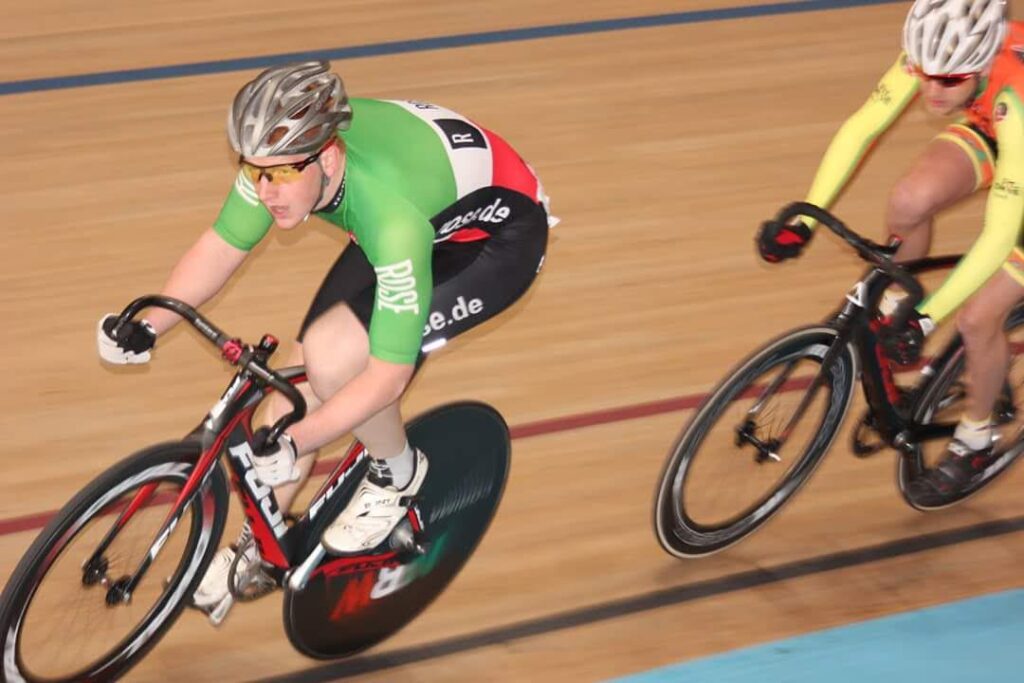
Cycling was my first passion.
From a young age, I was fascinated by the rhythm of training, the strategy of racing, and the pure feeling of speed on the road.
My life revolved around kilometers, heart rates, wattage, and race schedules.
The path ahead seemed clear: I was on track to become a professional cyclist.
Everything in my life – diet, sleep, social life – was optimized for performance.
When you chase the pro dream, you don’t leave much room for “Plan B.”
But as any athlete knows, life rarely follows a perfect script. Injuries, competition, timing, and sometimes just the unpredictability of life can change the trajectory.
And that’s exactly what happened.
A Shift in Focus: Entering the World of Logistics
When it became clear that professional cycling wouldn’t be my long-term path, I had to pivot.
I began studying Business Management. It was a completely different rhythm – lectures, assignments, exams – compared to training camps and race calendars.
But then came the twist: during my studies, I stumbled into the world of on board courier logistics.
At first, I had no idea what “OBC” even meant.
The idea that someone could be called at any hour to personally fly with a shipment halfway across the world fascinated me. It sounded like a mix between business travel, adventure, and responsibility of the highest order.
Soon, I wasn’t just reading about it. I was living it.
Studying in the Sky
Once I started working as an OBC during my studies, my life became a juggling act.
While many classmates found quiet corners in the library, I was often on planes with a laptop on my tray table, studying between security checks, boarding calls, and tight airport transfers.
- Instead of long rides on the bike, I had long-haul flights.
- Instead of climbing hills, I was running through terminals.
- Instead of an aero position, I was wedged into an economy seat with textbooks and highlighters.
I’ll never forget the looks from fellow passengers when I pulled out thick study binders mid-flight. Or the challenge of keeping concentration while turbulence sent my pens rolling under the seats.
By the time exams came around, the irony hit me: while the rest of the semester had been a blur of airports and aircraft cabins, suddenly I was stationary. Sitting in a university hall, not an airplane seat.
It was a strange contrast, but it taught me something important: adaptability.
I learned to focus under less-than-ideal conditions and to deliver results regardless of the environment.
The Parallels Between Cycling and OBC
At first glance, professional cycling and OBC logistics couldn’t be more different. One is a sport, the other is a niche within global trade. But looking closer, I see strong parallels that prepared me for the OBC world:
- Speed & Timing: In cycling, every second matters. In OBC, every minute counts when production lines are down or critical parts need delivery.
- Precision: Cycling is about small margins – gear ratios, pacing, positioning. OBC is the same: flight options, customs procedures, and communication all require exact execution.
- Resilience: Cyclists endure crashes, bad weather, and exhaustion. OBCs face flight cancellations, customs delays, and sleepless nights. Both demand mental toughness.
- Teamwork: No race is won alone. Likewise, OBC is never just one courier – it’s the coordination between clients, brokers, operations teams, and airlines.
Cycling gave me the mindset. Logistics gave me the mission.
Lessons from 36,000 Feet
Working as an OBC while studying wasn’t just a side job. It became a crash course in business, responsibility, and real-world problem solving.
Here are a few lessons I carry with me:
Discipline travels well.
The habits I built as an athlete – structure, consistency, and attention to detail – were the same ones that allowed me to succeed in logistics.
Uncertainty is part of the game.
Whether in a race or at customs, not everything is in your control. What matters is how quickly you adapt and find solutions.
Speed without control is nothing.
In both cycling and logistics, it’s not just about moving fast. It’s about moving fast while staying precise and safe.
Resilience beats perfection.
Turbulence, delays, or tough exams – they test your patience. But resilience is what keeps you moving forward.
From Student to Founder
Eventually, studying at 36,000 feet turned into founding a company on the ground.
With OBC ONE, I wanted to take the lessons from both worlds – the drive of an athlete and the discipline of a courier – and build a solution that freight forwarders could rely on.
Today, we help clients handle the world’s most urgent shipments with transparency, reliability, and speed.
The same values that mattered to me on the bike – trust, precision, performance – now define how we work as a team in logistics.
Looking Back, Moving Forward
I didn’t become a professional cyclist. And that’s okay.
Instead, I found a career that still revolves around speed, precision, and resilience – just in a different setting.
I went from chasing seconds on the road to ensuring shipments arrive across continents.
From two wheels to 36,000 feet.
Most students studied in the library.
I studied at 36,000 feet.
And in the process, I discovered not just a career, but a calling.