
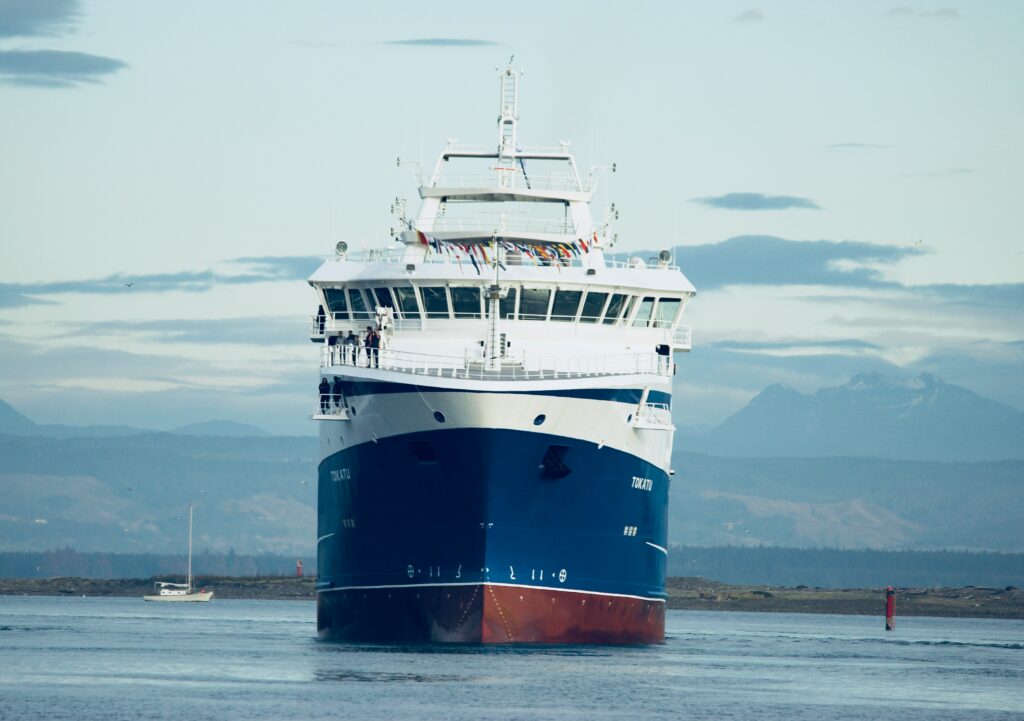
Break bulk is cargo too large, heavy, or oddly shaped to fit in a standard container, loaded and unloaded individually with cranes rather than stacked as sealed boxes. A single wind turbine blade can measure 75 meters and weigh 18 tons, moved on a specialized heavy-lift vessel rather than a container ship. Unlike containerized cargo, break bulk sits exposed on open deck or dock, sometimes for days before loading even begins, which is why weather, tracked by bodies such as the National Weather Service, shapes break bulk logistics as much as the route itself.
What break bulk actually covers
Break bulk exists for cargo that simply cannot be broken down to fit a standard container without disassembly, reassembly, or unacceptable risk.
- Heavy machinery, structural steel, and industrial equipment, moved as complete units rather than in pieces.
- Wind turbine blades and towers, a rapidly growing category as renewable infrastructure projects expand.
- Yachts, pipes, and entire factory components, each requiring its own lifting and stowage plan rather than a standardized loading process.
Why weather exposure is the defining risk
A shipping container seals its contents away from the elements for the entire voyage. Break bulk cargo does not have that protection.
- Cargo often sits on an open dock for an extended period before vessel loading even begins, exposed to rain, salt air, and temperature swings the whole time.
- Metal components can corrode from saltwater exposure, electrical machinery can suffer moisture intrusion, and wooden packaging can weaken under sustained rain.
- Long port dwell times make this worse, since the longer cargo waits exposed before loading, the more time weather has to cause damage before the voyage has even started.
Why not every port can handle a break bulk shipment
Break bulk requires infrastructure most modern container terminals were never built for.
- Heavy-lift cranes rated for the specific weight involved, ranging from 10 to 800 tons of capacity depending on the cargo.
- Skilled stevedores and riggers, since a miscalculation in weight distribution or sling positioning during lifting can cause cargo to swing or drop.
- Only a limited number of major ports, including Rotterdam, Hamburg, Antwerp, Houston, and Singapore among others, maintain the dedicated berths and equipment break bulk actually needs.
Why break bulk takes longer than the transit time alone suggests
International break bulk transit commonly runs 20 to 45 days, similar to containerized ocean freight, but loading and unloading alone can add another 3 to 7 days at each end, compared to roughly 24 hours for a container ship, since every piece is individually rigged, lifted, and secured rather than stacked in a standardized process governed by frameworks such as those maintained by the International Maritime Organization.
Where a smaller critical component travels separately
A break bulk project often includes components that do not need to travel with the massive pieces at all, a control module, a sensor package, a critical spare that fits in a courier’s hand rather than on a crane hook. Waiting for the same vessel, the same dwell time, and the same weather exposure as an 18-ton blade rarely makes sense for a small, high-value part with its own deadline. An onboard courier moves that piece directly, without the weather exposure or extended dock time break bulk cargo inherently carries.
Break bulk vs. onboard courier for the small, critical piece
| Criteria | Break bulk | Onboard courier |
|---|---|---|
| Exposure | Open deck or dock, weather dependent | Cabin custody, no weather exposure |
| Handling | Crane lift, individual rigging per piece | Carried personally by one courier |
| Best for | Oversized cargo that cannot be containerized | Small, critical components from the same project |
How OBC ONE handles the small piece of a break bulk project
A typical mission runs through six steps with OBC ONE, most of which overlap to save time.
- Brief and quote. You share the component, origin, destination, and the deadline. OBC ONE returns an all-in quote in under 15 minutes.
- Courier assignment. A vetted courier near the origin is dispatched immediately.
- Secure pickup. The item is collected directly, verified before departure.
- Personal custody in transit. The courier carries the item in the cabin, staying with it through every connection.
- Direct delivery. Handover happens at the project site or party who needs it.
- Proof of delivery. Timestamped confirmation for your records.
Why freight forwarders route these missions through OBC ONE
Choosing the right partner for the small, urgent piece of a larger project starts with the business model. Many specialty couriers sell directly to shippers, which puts them in competition with the forwarders who might otherwise use them. OBC ONE is built the opposite way: we work exclusively for and with freight forwarders and time-critical desks. We never approach your clients directly and never compete with you.
That partner model is backed by real operator experience. OBC ONE was founded by an onboard courier who personally flew roughly three million kilometers over six years, so the network understands exactly when a component needs to move on its own schedule, separate from the heavy lift it belongs to. Forwarders use us because we deliver:
- An all-in quote in under 15 minutes, 24/7/365.
- 1,500+ vetted couriers positioned around major hubs worldwide.
- True door to door coverage, with import and export customs clearance and Importer of Record service in most markets.
- IATA certified dangerous goods capability for shipments that require it.
- One specialty, onboard courier and hand carry for time-critical missions, done at the highest standard.
How to choose a partner for a project cargo component
- Honest guidance on what actually needs to ride with the heavy lift, and what does not.
- Real network density near major hubs, so the courier option is not delayed by being flown in first.
- Fast, transparent quoting, ideally with a named dispatcher accountable for the mission.
- Documented dangerous goods competence, relevant to the specific component.
- A forwarder-only model, if you are a forwarder, so your partner never becomes a competitor for your clients.
Frequently asked questions
What is break bulk cargo?
Break bulk is cargo too large, heavy, or irregularly shaped to fit a standard shipping container, loaded and unloaded individually with cranes rather than stacked as sealed boxes.
Why is weather exposure such a significant risk in break bulk shipping?
Unlike containerized cargo, break bulk is not sealed away from the elements and can sit on an open dock for an extended period before loading, exposing it to rain, salt air, and temperature swings that can cause corrosion or moisture damage.
Why can’t every port handle break bulk cargo?
Break bulk requires heavy-lift cranes, skilled riggers, and dedicated storage space that many modern container terminals were not built for, which limits it to a smaller number of specialized ports.
Why does break bulk take longer than the ocean transit time suggests?
Loading and unloading can add 3 to 7 days at each end, compared to roughly 24 hours for a container ship, since every piece is individually rigged and secured rather than handled in a standardized process.
Does every part of a break bulk project need to travel the same way?
No. Smaller critical components, such as a control module or a spare part, often do not need to wait for the same vessel or dwell time as the oversized pieces and can move separately on their own schedule.
Do you sell directly to shippers or buyers?
No. OBC ONE works exclusively with and for freight forwarders and time-critical desks. We act as a white label partner and never approach our clients’ customers directly.
Get the small, critical piece moving separately in 15 minutes
If you are a freight forwarder with a critical component that should not wait for a heavy lift shipment’s exposure and dwell time, OBC ONE gives you a straight answer, 24/7, worldwide and never a competitor. Contact our team for an all-in quote in under 15 minutes, or explore more time-critical logistics insights.